Histrionic Personality Subtypes (Millon)


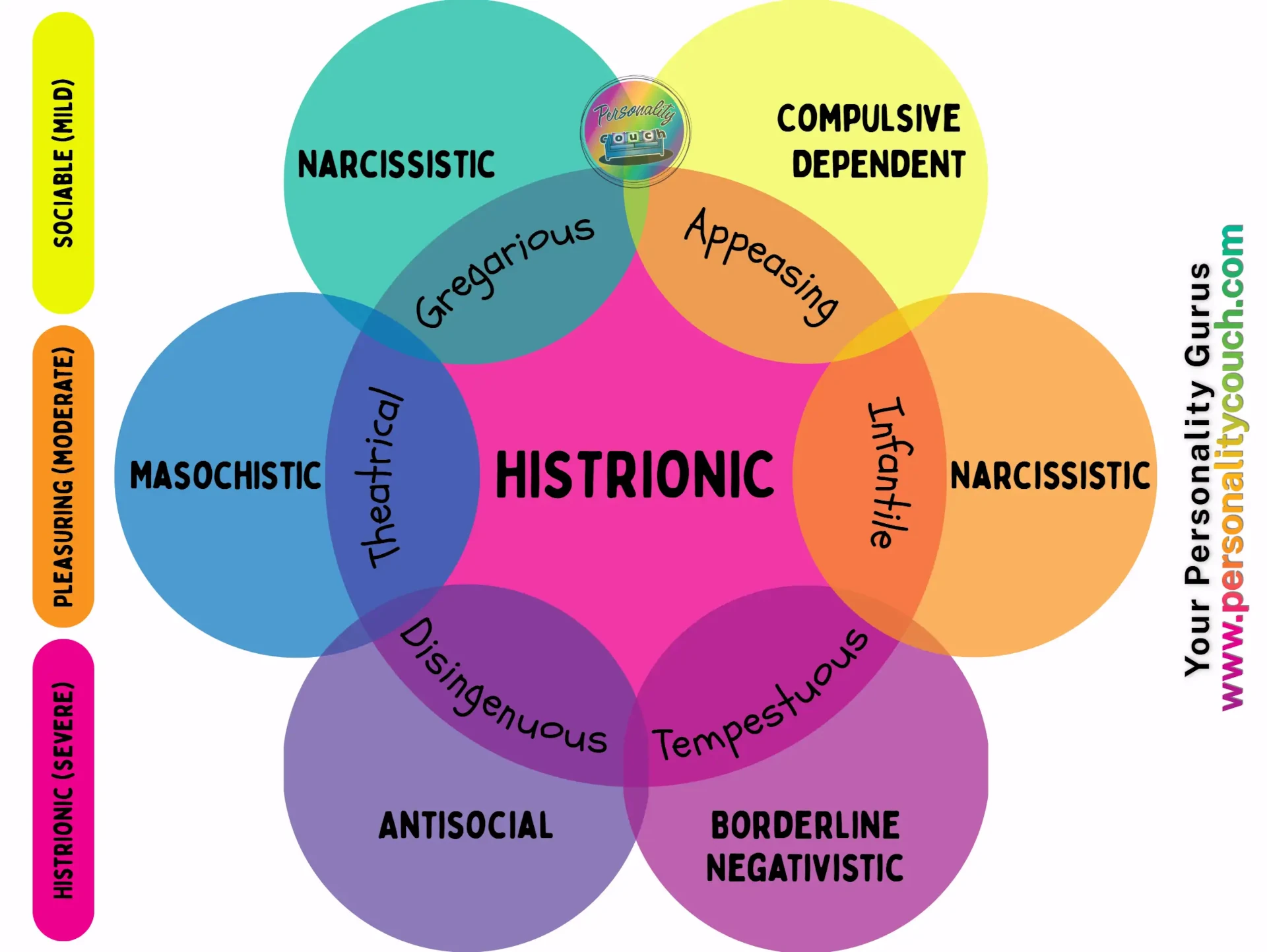
Histrionic personality disorder has a history wrought with stigma and horrible treatment (read more about the history of histrionic personality disorder here). Because they are so other-focused and social, their impairment usually involves interpersonal difficulties. Often, histrionic flavors can be easily seen because of the externalized, attention-seeking behavioral displays. But no personality is textbook or straightforward, and Millon helps us understand how the histrionic personality can mix with some other personalities. Let’s explore his histrionic personality subtypes!
Sociable Personality: Mild - Normal Level1
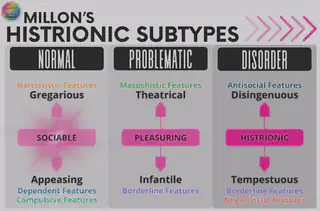
At the mild, normative level, Millon calls the histrionic: Sociable personalities, describing them as socially clever, actively other-focused, and confidently outgoing. They work the people scene, trying to be popular, meet new people, and charm others. However, their intense emotions can change quickly, especially with the boredom of a mundane life, leading others to see them as impulsive and superficial but also exciting and optimistic. Millon highlights two subtypes: the Gregariously Sociable personality and the Appeasingly Sociable personality.
Gregariously Sociable (Narcissistic Features)1
The Gregariously Sociable subtype overlaps with narcissistic features, with more of a focus on outgoing friendliness instead of the dramatic aspects of histrionic. They want to be perceived as appealing and attractive in order to be part of the social group…and hopefully the center of it. Unlike the narcissist, they chase security and approval, not ego cookies. They act as a counterfeit currency, lacking authenticity (because that’s too vulnerable), and adjusting to what they think others want. They display whatever qualities “sell,” and like the narcissist, they fear exposure of their own fraudulence. This can result in having no sense of self, only presenting false selves like an actor taking on different roles.

Appeasingly Sociable (Dependent, Compulsive Features)1
The Appeasingly Sociable subtype overlaps with both dependent and compulsive personality features, and dare I say… they have more of a compulsive need to please others (the dependency piece). They need approval…that’s their life goal, which means they are extra good (compulsively good) at peacekeeping, placating, and self-sacrifice (hence the dependent features). If they find a place in an extremist group, they can engage in violence in pursuit of attention and admiration, perhaps paralleling a need to satisfy a parent-figure they were never able to satiate. Underneath their desire to please, they feel worthless and unlovable due to childhood criticism and belittlement, usually repressing anger to compensate by pursuing affection.
Pleasuring Personality: Moderate - Problematic Level1
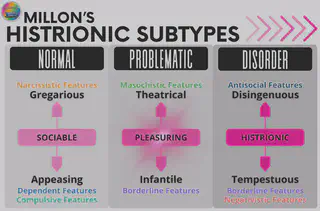
Millon calls this level the Pleasuring personality, noting that these histrionic structures usually reap the benefits and rewards of being social; however, they can backslide into problematic dynamics such as frantic, flighty attempts to gain attention. This happens when others start to become annoyed with them or even reject them due to their constant attention-seeking and superficiality. His two subtypes at the moderate level include the Theatrically Pleasuring and Infantile Pleasuring personalities.
Theatrically Pleasuring (Masochistic Features)1
The Theatrically Pleasuring subtype overlaps with masochistic features, essentially being a caricature of the histrionic, showcasing dramatization, exaggeration, and attention-seeking behaviors. All parts of the self are viewed as external assets like an actor on a stage. They can change as needed, being a chameleon to fit the image needed, which also means there is a harsh internal emptiness. They reflect what attracts others and manipulate to seem genuine. One version of this may be the person with all the fake nails, lips, body, clothes, etc. Another may be the disillusioned spouse, seeking to be a casanova or siren to obtain the prized others.

Infantile Pleasuring (Borderline Features)1
The Infantile Pleasuring subtype combines with borderline features, resulting in a pouty, clingy, dependent, demanding, and emotionally volatile personality. They need reassurance, feeling a deep fear of abandonment. They fluctuate between self-deprecation/moodiness, angry outbursts, and high impulsive energy. They can feel all the things at once, even if they are conflicting, being submissive and compliant, yet petulant and rageful… like a young child. They can also be seductive, having difficulty controlling their physical and emotional impulses.
Histrionic Personality: Severe - Disorder Level1
Here is where histrionic personality disorder can arise, as well as the potential for severe clinical disorders. As hard as they try, they keep getting rejected. They slip into more unhealthy dynamics and a disjointed internal world due to failures to attain attention, support, and approval from others, especially others they used to depend on. Millon’s two subtypes here are the Disingenuous Histrionic and the Tempestuous Histrionic personalities.
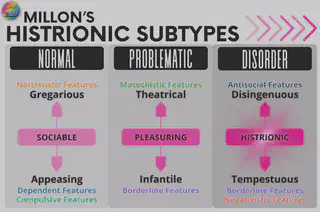
Disingenuous Histrionic (Antisocial Features)1
The Disingenuous Histrionic subtype overlaps with antisocial features, being sociable and charming on the outside, but hiding resentment, impulsivity, and moodiness on the inside. They are self-indulgent in their seeking of excitement and attention, usually through seductiveness, and they can make connections easily; however, relationships are surface level and short-lived. They can be quite crafty, calculating, and deceitful at times (the antisocial flavor), lacking loyalty and shrewdly utilizing defense mechanisms. Unlike other histrionic personalities, they enjoy confrontations. Their original histrionic desire for approval seems to have deteriorated into the manners to obtain approval: by being cunning, controlling, and manipulative. Their anger is easily triggered by potential embarrassment or weakness. Even so, their deepest fear is that they are unlovable. So, they lie to themselves as much as they deceive others, convincing themselves that they’re pretty much well intentioned. Though rare, they can be briefly rageful and abusive.

Tempestuous Histrionic (Negativistic, Borderline Features)1
The Tempestuous Histrionic subtype mixes with negativistic and borderline features, being impulsive, moody, immature, and erratic. They are often out of control and turbulently over-reactive, responding to minor triggers with anger, especially due to low frustration tolerance and hypersensitivity to criticism. Without attention, they either become depressed or frantically try to obtain approval. They can cycle through “ups” involving euphoria and “downs” of hopelessness and self-condemnation, as well as anger and depression. Their “downs” can be wrought with substance use, overeating, and sleeping a lot. Though they want to be liked and pursue attention, their childlike self-centerness and demandingness often results in conflict with others. Basically, they can’t help but to tantrum. Eventually they trend toward more negativistic features such as being bitter, envious, and argumentative. They can also start to display somatic concerns and overreactions to illness.
Do any of these speak to you? Histrionic personality dynamics can be difficult to separate from other personalities (especially borderline). If you want to dive into your own histrionic dynamics, therapy and/or psychological testing can help! If you’re in Virginia (or a PsyPact state), check out Quest Psychological and Counseling Services for available services. If you’re a provider stuck on a case, we also offer consultations for mental health professionals!
