Schizoid Personality (SzPD)
DSM-5-TR: 301.20 ICD-10: F60.1Our most popular series by far, we discuss how the schizoid personality is often misunderstood and liken this type to a turtle, preferring to be alone vs in the social world. We explore psychodynamic theory and Nancy McWilliams’ conceptualization (which we find more complete than the DSM). We also contrast schizoid and autism; answer viewer questions; explore subtypes (and make our own!); and also contrast SzPD with avoidant personality.

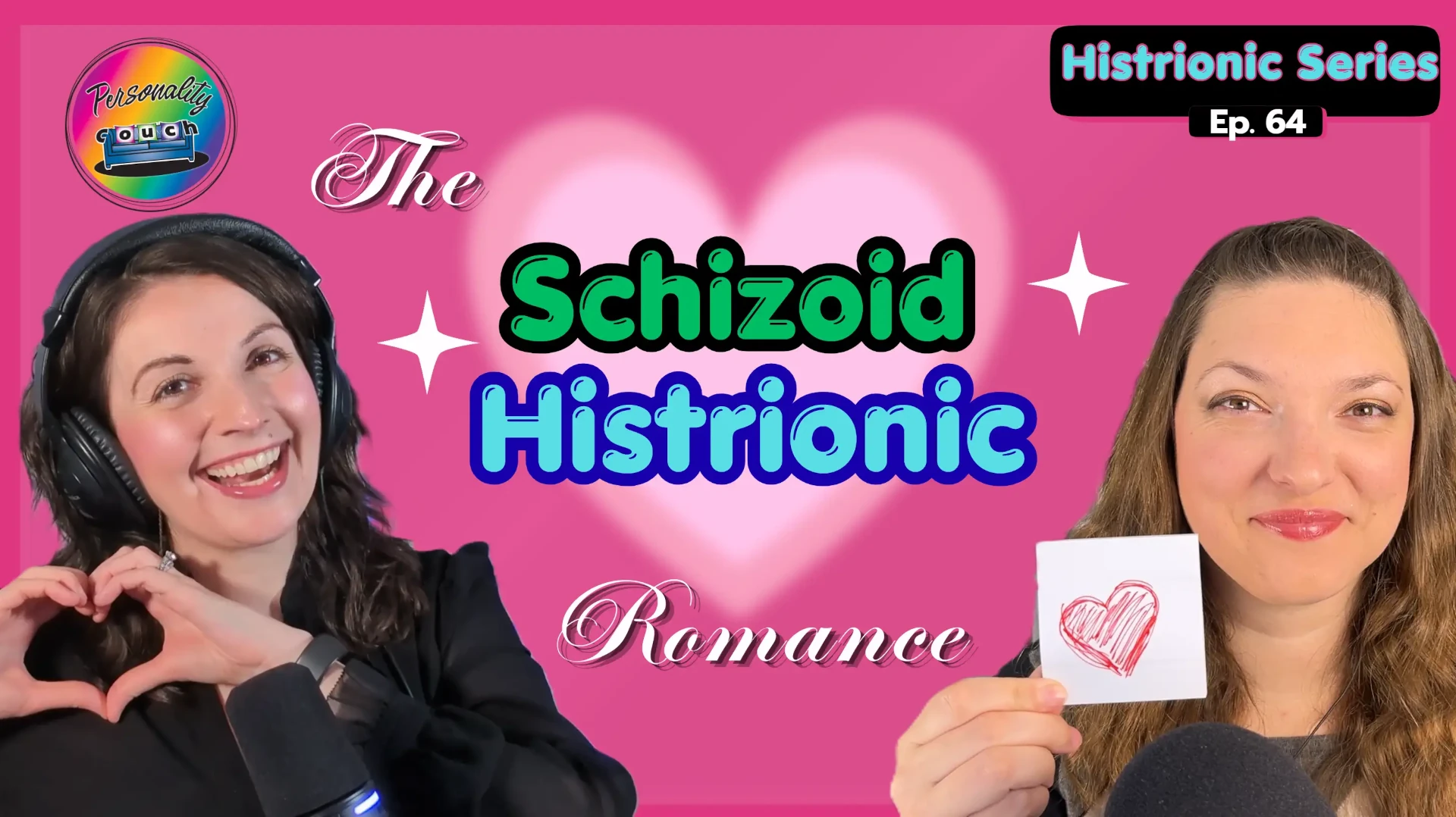
Ep 64: The Schizoid Histrionic Romance
🎬In this episode of the Personality Couch Podcast, we (licensed clinical psychologists Doc Bok and Doc Fish) explore the intriguing dynamics between schizoid and histrionic personalities, focusing on their attraction, shared trauma, familial gender dynamics, and hypersensitivity. We explore how these opposites attract romantically, and how at healthy levels, they can meet each other’s unspoken needs.
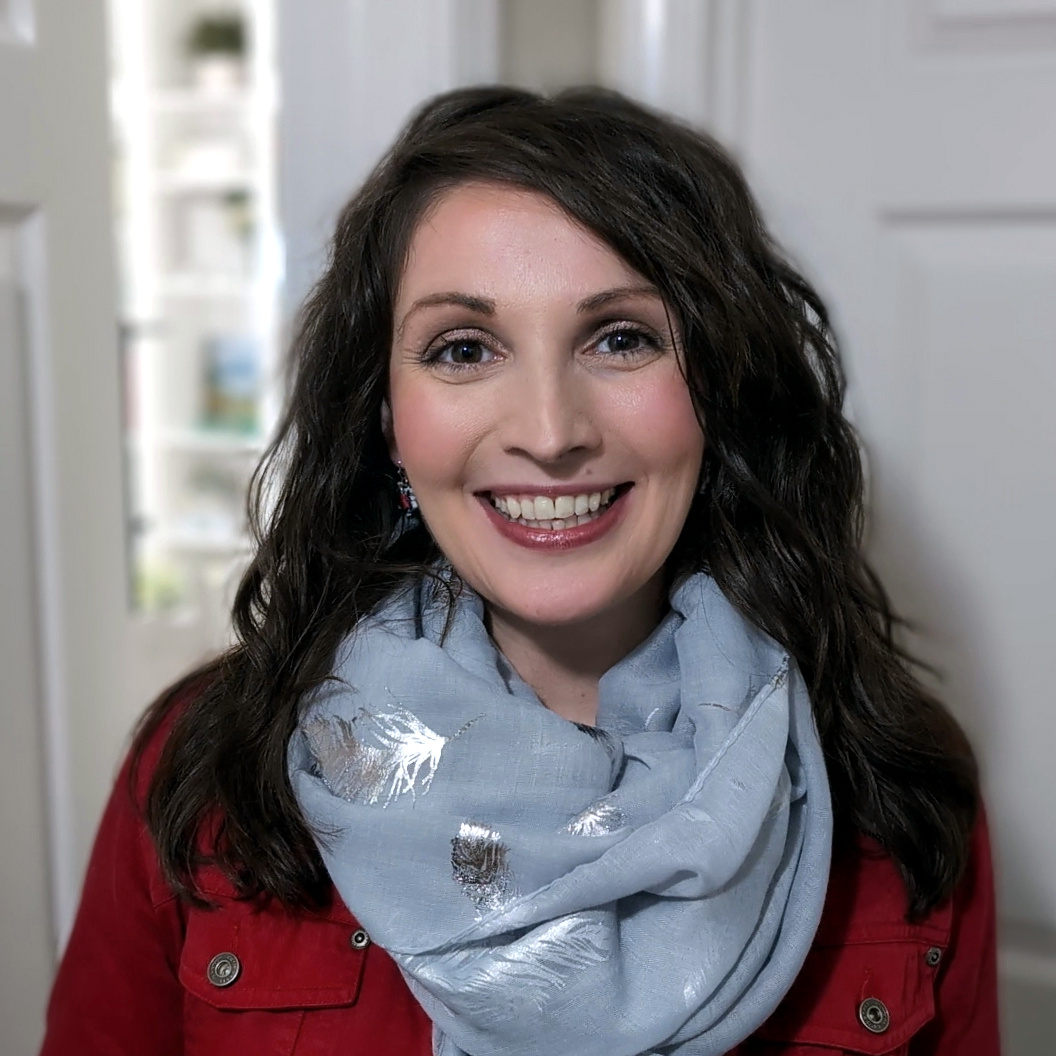 Doc Bok
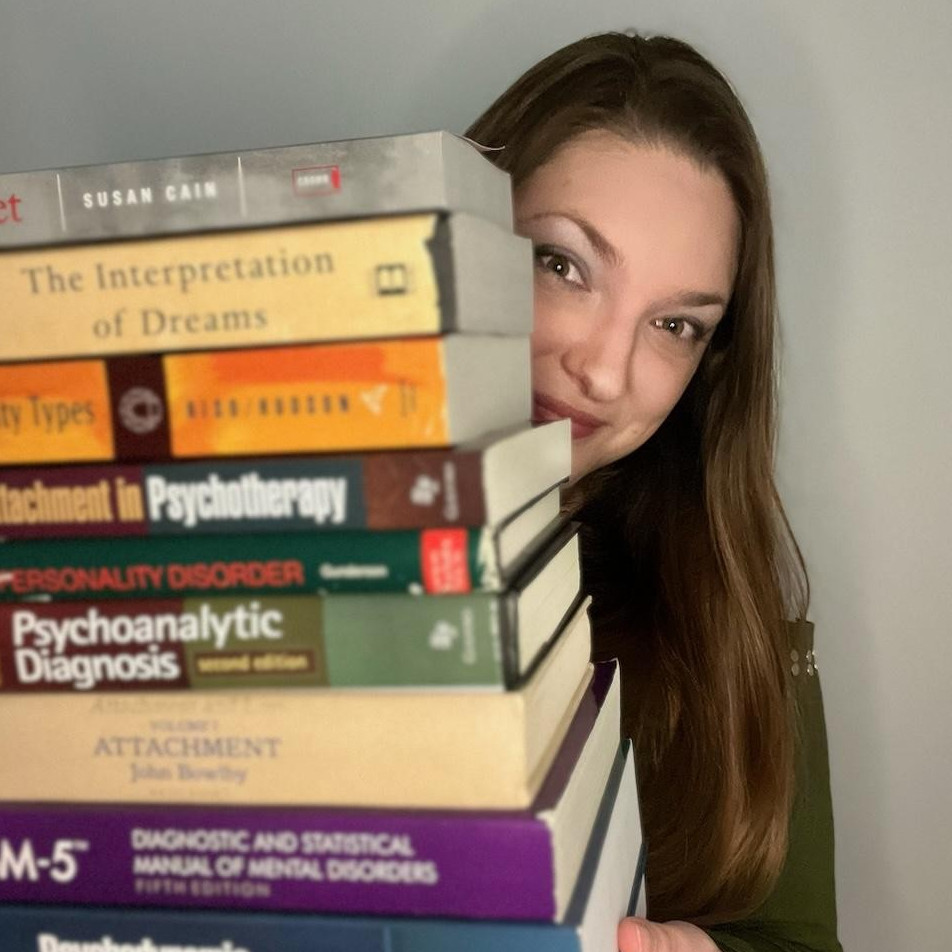 Doc Fish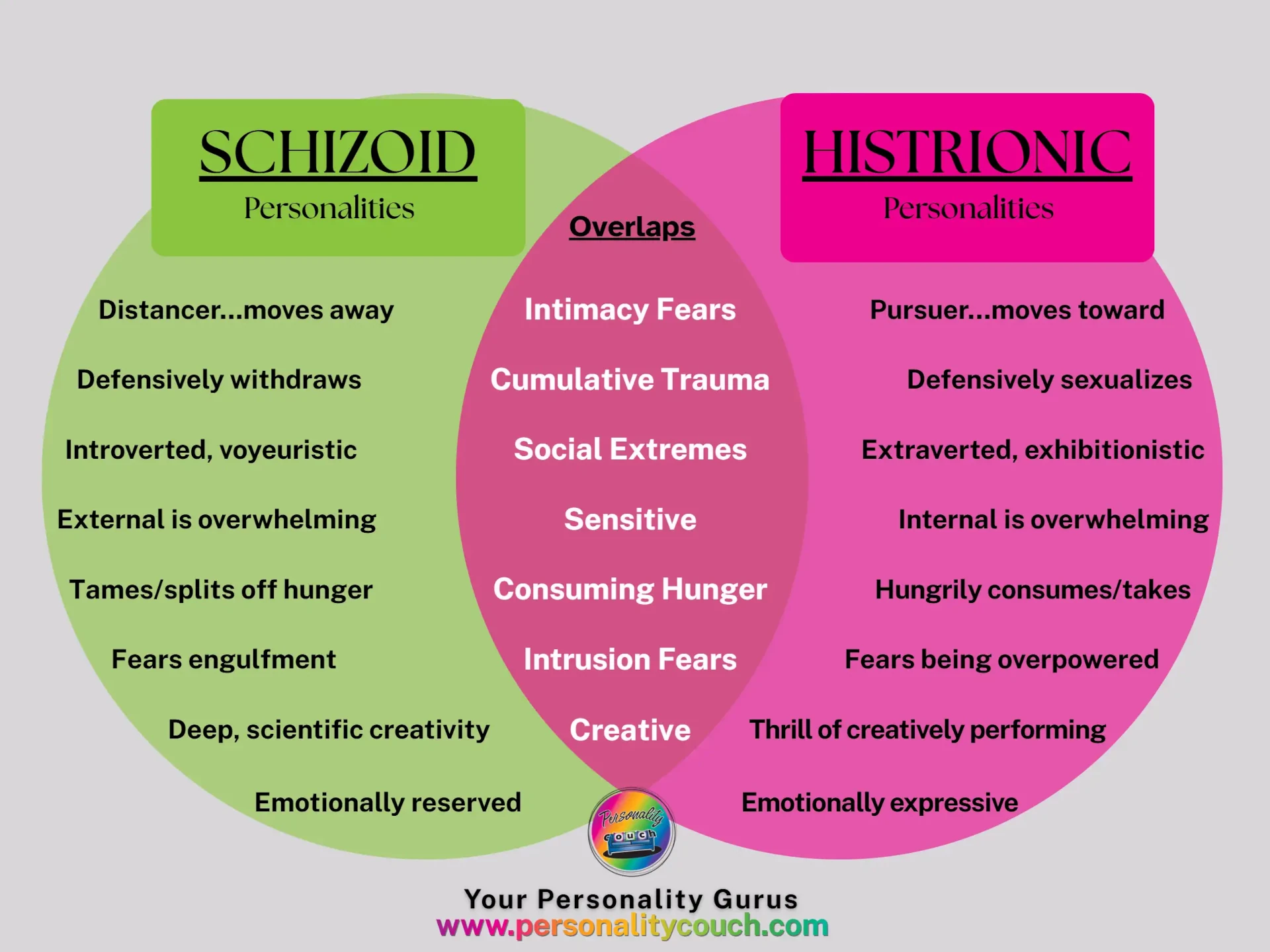
The Schizoid & Histrionic Romance
Do opposites really attract? For schizoid personalities and histrionic personalities, it seems this may be the case. Join me as I explore the dance between these two opposite personalities.
Doc Fish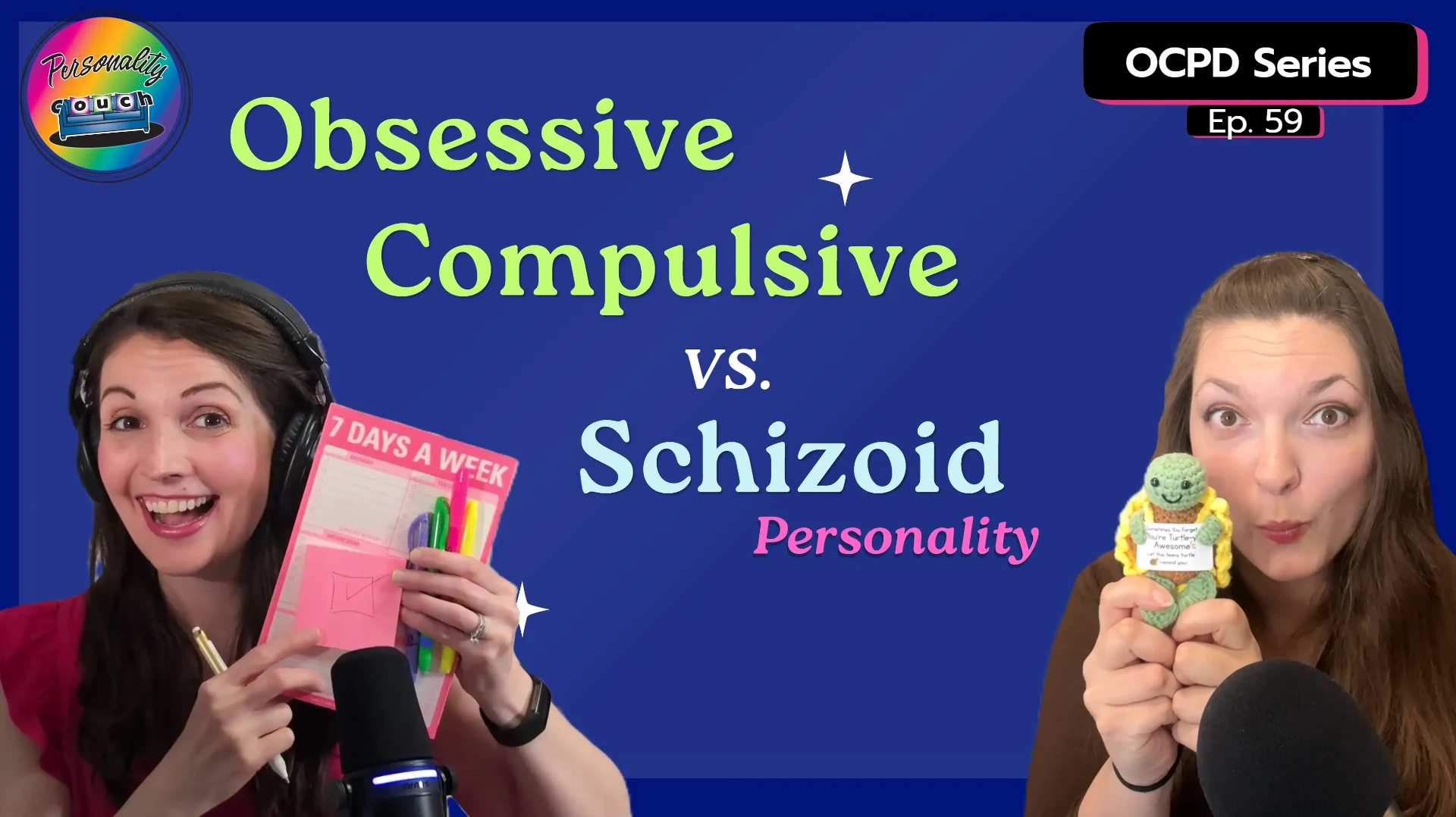
Ep 59: OCPD vs Schizoid Personality
🎬In this episode of the Personality Couch Podcast, we (licensed clinical psychologists Doc Bok and Doc Fish) unpack the nuanced differences and overlaps between obsessive-compulsive personality disorder (OCPD) and schizoid personality disorder(SzPD). We investigate each personality’s core drives, emotional experiences, and defense mechanisms, using a psychodynamic lens to capture these very different (yet similar) personalities.
Doc Bok
Doc Fish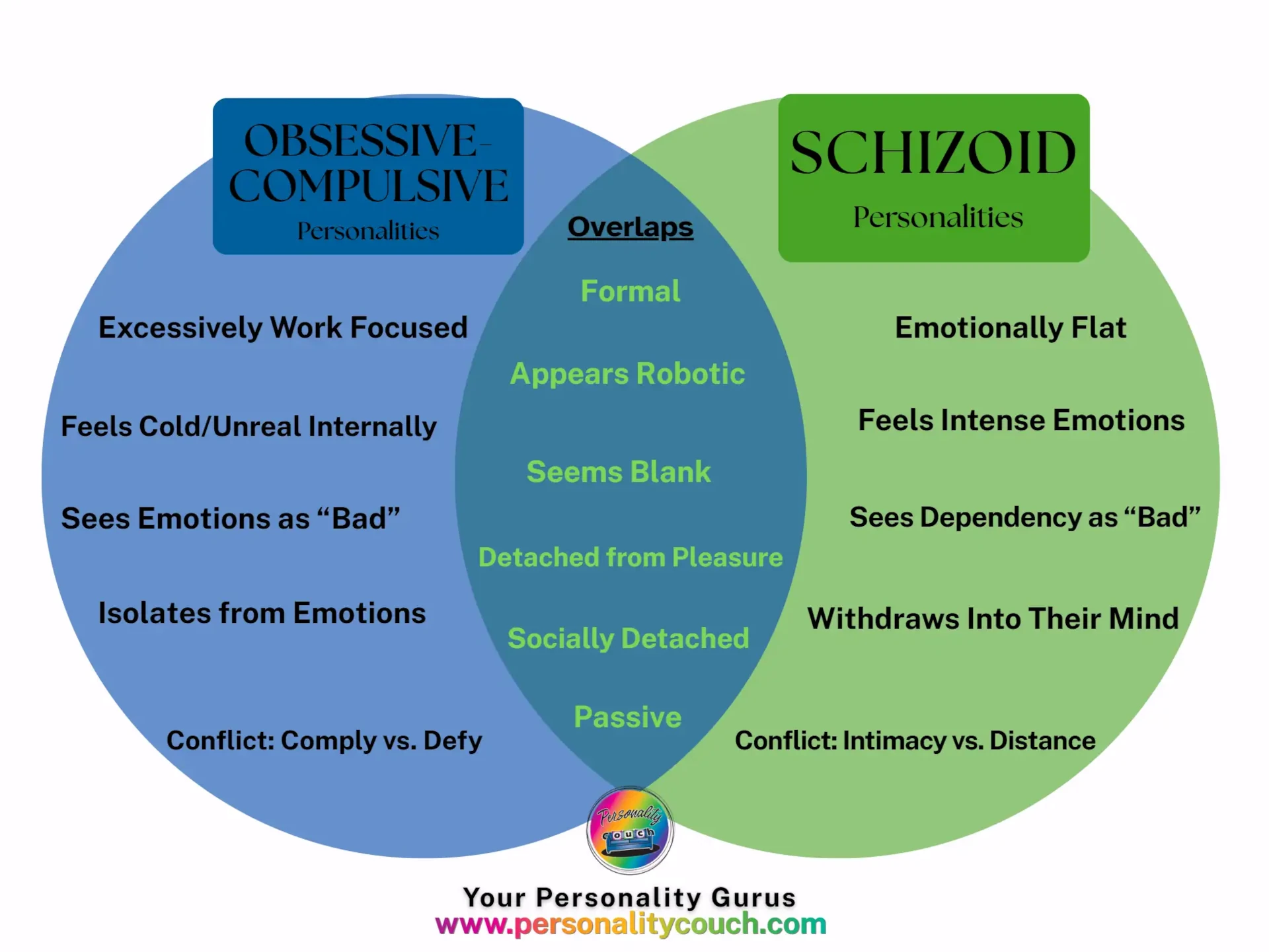
Obsessive-Compulsive vs. Schizoid: What’s the Difference?
Have you ever seen a “wooden” or “robotic” personality…or maybe you recognize it in yourself when you look in the mirror? There are a couple personalities that may embody this persona, and they are surprisingly similar on the outside. But the inside is vastly different! Join me as I discuss overlaps between obsessive-compulsive personality and schizoid personality!
Doc Fish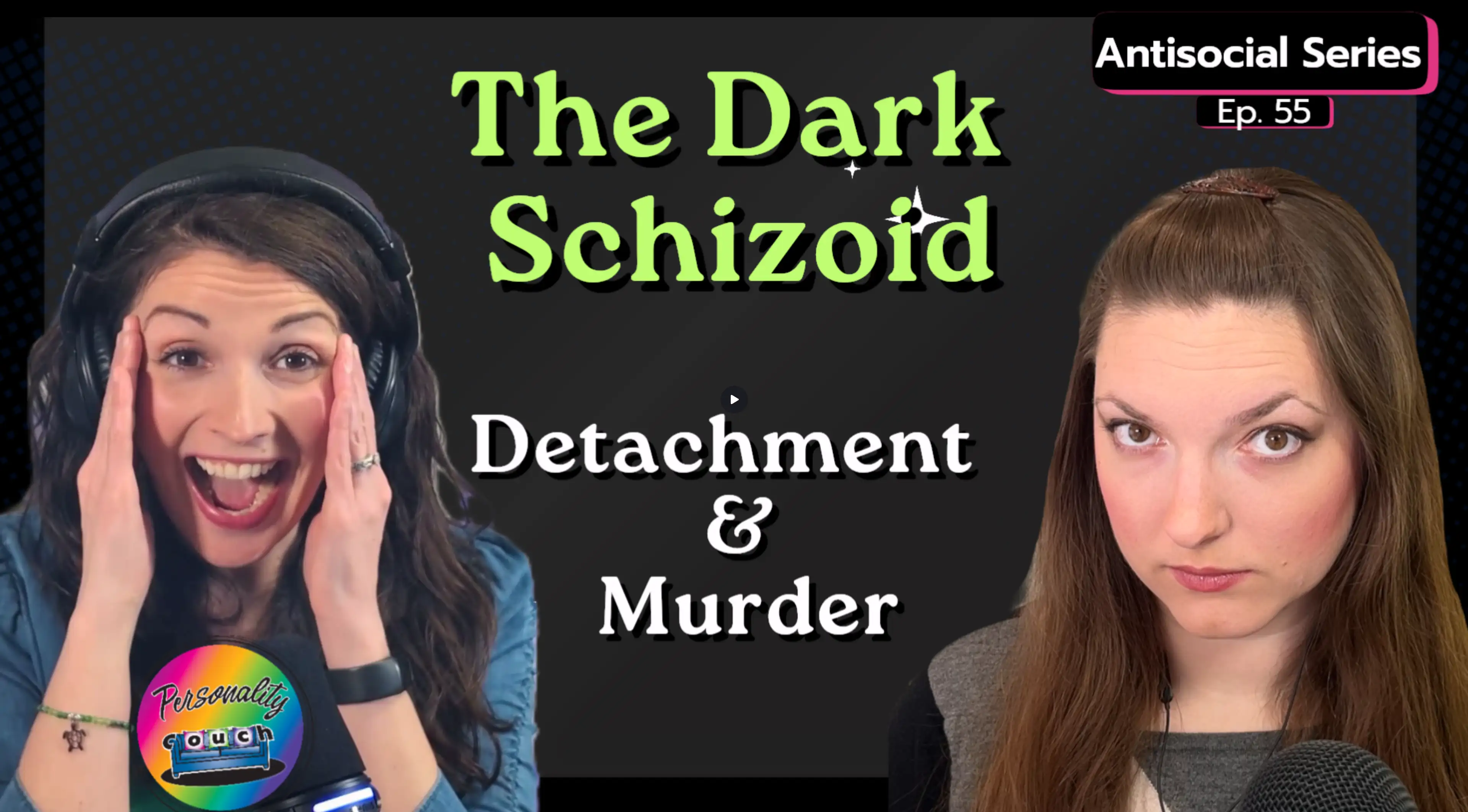
Ep 55: The Dark Schizoid
In this episode of the Personality Couch Podcast, we (licensed clinical psychologists Doc Bok and Doc Fish) explore the distinctions between antisocial personality and narcissistic personality by analyzing DSM diagnoses, Stones’ Spectrum of Dark Personalities, and subtypes from Dr. Theodore Millon like: Reputation-Defending Devious, Exploitative Egotist, and the Unprincipled Narcissist.
Doc Bok
Doc Fish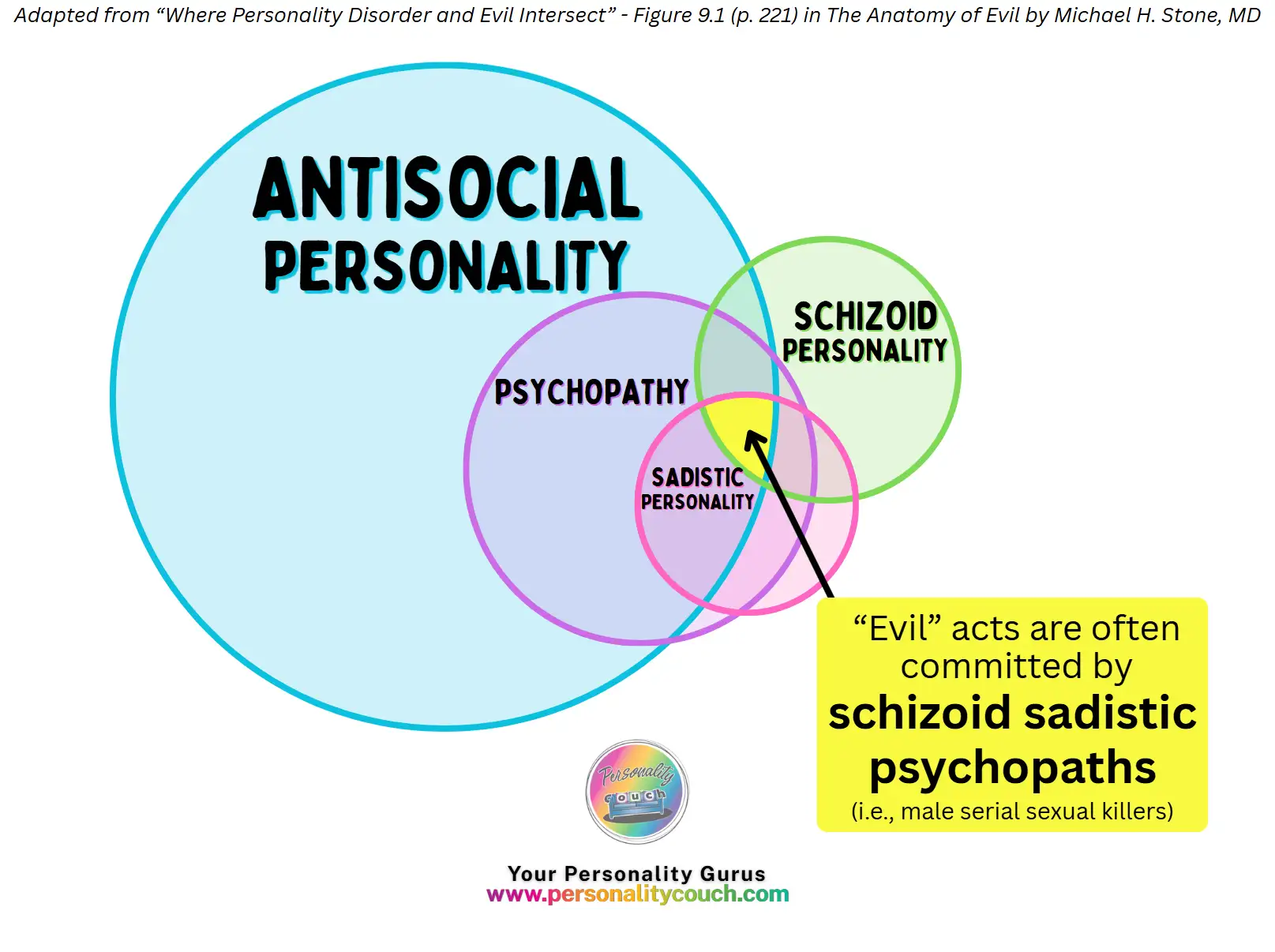
The Dark Schizoid
Can a turtle-y schizoid personality and a tiger-y antisocial personality overlap? Or are they too different? Join me as I explore the dark intersection of these two socially detached personalities!
Doc Fish
Ep 45: Schizoid Personality's Close Cousin: Avoidant in the DSM
In this episode of the Personality Couch Podcast, we (licensed clinical psychologists Doc Bok and Doc Fish) unpack the DSM’s Avoidant Personality Disorder (AvPd), exploring its hotly debated history, the DSM criteria, and its overlap with social anxiety. We discuss the developmental aspects of AvPd, the challenges of low self-esteem with this disorder, and how it can cause problems in employment. We end with our own unfiltered thoughts on whether or not we think it should be a diagnosis, questioning the zeitgeist in which it was coined, the lack of historical research, and its overlap with multiple other personality disorders.
Doc Bok
Doc Fish
Avoidant Personality Disorder in the DSM
Avoidant personality disorder is relatively new (‘80s) and is becoming more common, but it can be pretty complicated to understand. It’s characterized by fear of rejection and feelings of inadequacy - a difficult, lonely place to be. Join me as I explore what the DSM-5-TR says about avoidant personality disorder.
Doc Fish
Ep 43: The 6 Schizotypal Subtypes Explained
In this episode of The Personality Couch Podcast, we (licensed clinical psychologists Doc Bok and Doc Fish) unpack the 6 subtypes of schizotypal personality disorder, according to Dr. Theodore Millon. We outline Millon’s take on “structurally defective structures” as being at risk of falling apart into psychosis at all levels of functioning, with the most severe levels of schizotypal deteriorating into schizophrenia. We then discuss the characteristics of mild, moderate, and severe subtypes, specifically: Disengaged Eccentrics, Apprehensive Eccentrics, the Insipid Schizotypal, the Timorous Schizotypal, the Immobile Schizophrenic, and the Disorganized Schizophrenic.
Doc Bok
Doc Fish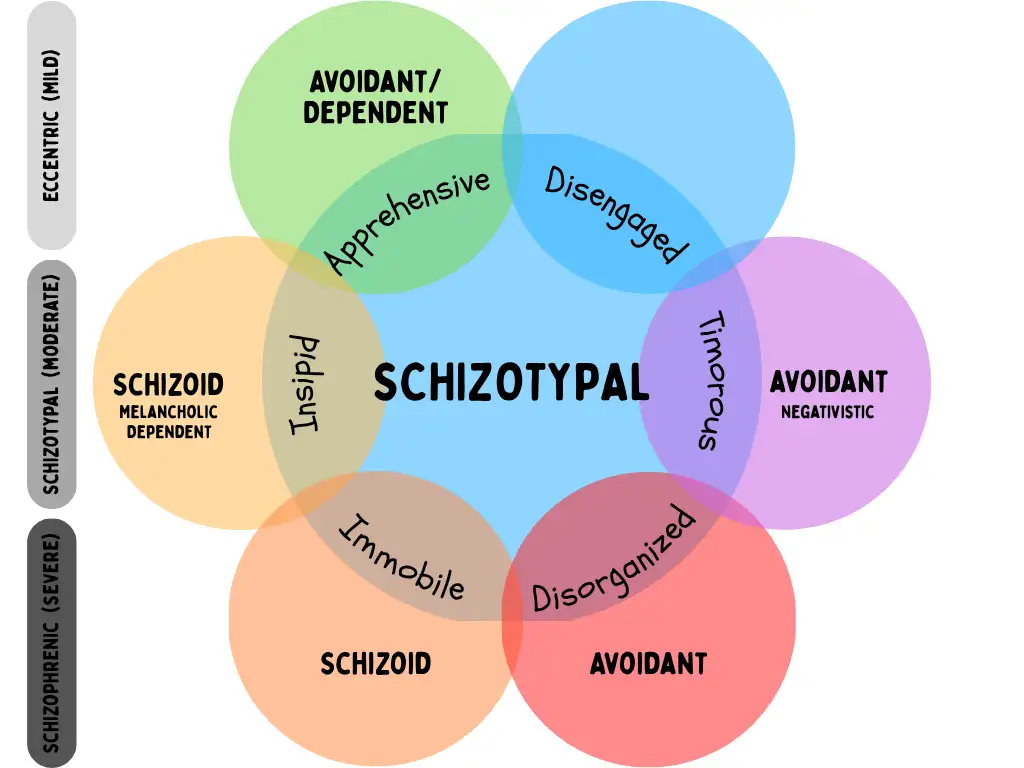
Schizotypal Personality Subtypes (Millon)
Join me, as I dive into Millon’s 6 schizotypal subtypes - a unique personality structure that can easily fall apart into psychosis.
Doc Fish